Helium, balloons and death.
Nail polish remover, paint thinner, hairspray, deodorant, computer cleaner, whipped cream, cooking spray, spot removers, air freshener, etc....
Do any of the above items sound familiar? Most homes have at least one or two of the products in their house.
The fact is inhalant use kills. The most recent headline of a 14-year old girl's death from inhaling helium is one of many tragedies.
What is inhalant abuse?
Inhalant abuse refers to the deliberate inhalation or sniffing of common products found in homes and communities with the purpose of "getting high." Inhalants are easily accessible, legal, everyday products. When used as intended, these products have a useful purpose in our lives and enhance the quality of life, but when intentionally misused, they can be deadly. Inhalant Abuse is a lesser recognized form of substance abuse, but it is no less dangerous. Inhalants are addictive and are considered to be "gateway" drugs because children often progress from inhalants to illegal drug and alcohol abuse. The National Institute on Drug Abuse reports that one in five American teens have used Inhalants to get high.
Tips for talking to your tweens and teens:
• Ask your pre-teen or teenager if he or she knows about Inhalant Abuse or is aware of other kids abusing products.
• Reinforce peer resistance skills. Tell him or her that sniffing products to get high is not the way to fit in. Inhalants are harmful: the “high” comes with high cost.
• Encourage your child to come to you if he or she has any questions about Inhalants.
• Tell your child that the consequences of Inhalant Abuse are as dangerous as those from abusing alcohol or using illegal drugs. Be absolutely clear
— emphasize that unsafe actions and risky behavior have serious consequences.
• Monitor your teen’s activities — set boundaries, ask questions. Be firm,
know his or her friends and his or her friends’ parents, know where they meet to “hang out.”
• Educate your child about the dangers, but don’t mention specific substances unless your child brings them up. While many youngsters know kids are sniffing some substances, they may not know the full range of products that can be abused; and you don’t want to give them suggestions.
• Tell your children that you love them and that their safety is your number one priority. Tell them again…and again…and again.
Source: Inhalant.org and visit this site to learn more.
Join me on Facebook and follow me on Twitter for more information and educational articles on parenting today's teenagers.
Thursday, March 22, 2012
Thursday, March 15, 2012
Teens Surfing Online: Do you know who they are chatting with?
When safety trumps privacy..... being a parent always takes priority... friendship will come later....
As a parent of a teenager in today's digital society it can be difficult to keep up with the ever changing Internet. It can be more challenging to keep your lines of communication open with your teen to insure their safety both online and off, however it is a priority for parents.
Stats parents should know:- More than 500,000 predators are online everyday
- Kids 12 to 15 are susceptible to being groomed and manipulated by offenders online
- FBI stats show that more than 50% of victims of online sexual exploitation are 12-15 years old
- 89 % of all sexual advances towards our children take place in internet chat rooms and through instant messaging
- In (27%) of exploitation incidents, predators asked kids for sexual photographs of themselves.
- 4% of kids get “aggressive” sexual solicitations that included attempts to contact the kids offline
ScreenRetriever gives you peace of mind. Screen Retriever is the only supervising software that follows the recommendations of the American Academy of Pediatrics. Sign up today for your free 2-week trial period. No credit card is required for this trial period.
Need help installing it? Yoursphere for Parents is a click away with user friendly instructions!
You can join ScreenRetriever on Facebook and follow them on Twitter.
Join me on Facebook and follow me on Twitter for more information and educational articles on parenting today's teenagers.
Thursday, March 8, 2012
Troubled Teens: Who can help you?
When a parent first hits that brick wall of having a teen that is out-of-control they literally are clueless at who to call or what to look up on the Internet.
Being in the dark can lead to making rash decisions and this is something you don't want to do when it comes to your child.
Some parents assume that Educational Consultants are the experts to turn to for placement of troubled teens and in some cases, that may be true. However, like with many other purchases in life, you need to know what you are buying into.
Educational Consultants were originally designed to help parents with their teens to find the right colleges and with the application process. As many know, this has been replaced with CollegeBoard and many other websites online.
As the shift in teen help increased, they seemed to branch out into the residential treatment field. Most have not experienced what you are going through. Most do not know what you are dealing with at home. Only an experienced parent that has been there really knows that feeling of helplessness. Which is why I created Parents' Universal Resource Experts, Inc.
We are parents - we have walked your shoes. After experiencing an extremely difficult time with my own teenager - surfing the Internet - being scammed online - my teen being harmed at a program that misrepresented themselves, I decided to take a closer look at this teen help industry.
After years of visiting schools and programs, collecting years of feedback (from parents, students and employees), background researches, on-site visits, etc... We offer parents advice and educated tips on looking at schools and programs.
The last thing parents need to get involved in, in our opinion, is an EC (Educational Consultant) Shuffle. What is the EC Shuffle? Find out more and try not to get into the mix. We do not employ this type of assistance for your needs. "The EC I spoke with only wants $500.00, that seems fair." Remember the cliché you get what you pay for, yes, you will find some Educational Consultants that will only charge $500.00 but you also get limited services usually including the EC Shuffle with a list of programs. Nothing more than you could have found on your own in a few Internet searches.
Some Educational Consultants are fair and don't employ this type of method. Please remember this is your child and no one knows him better than you. Do you really need a middle person for your child? Shouldn't the program speak directly to you? Save yourself $5000.00 and find the right for your child. It may take you a day or two longer, but you can do it. Sometimes it doesn't take that long - it is all about knowing the right questions - and at www.helpyourteens.com - we have helpful tips and hints to guide you.
Being in the dark can lead to making rash decisions and this is something you don't want to do when it comes to your child.
Some parents assume that Educational Consultants are the experts to turn to for placement of troubled teens and in some cases, that may be true. However, like with many other purchases in life, you need to know what you are buying into.
Educational Consultants were originally designed to help parents with their teens to find the right colleges and with the application process. As many know, this has been replaced with CollegeBoard and many other websites online.
As the shift in teen help increased, they seemed to branch out into the residential treatment field. Most have not experienced what you are going through. Most do not know what you are dealing with at home. Only an experienced parent that has been there really knows that feeling of helplessness. Which is why I created Parents' Universal Resource Experts, Inc.
We are parents - we have walked your shoes. After experiencing an extremely difficult time with my own teenager - surfing the Internet - being scammed online - my teen being harmed at a program that misrepresented themselves, I decided to take a closer look at this teen help industry.
After years of visiting schools and programs, collecting years of feedback (from parents, students and employees), background researches, on-site visits, etc... We offer parents advice and educated tips on looking at schools and programs.
The last thing parents need to get involved in, in our opinion, is an EC (Educational Consultant) Shuffle. What is the EC Shuffle? Find out more and try not to get into the mix. We do not employ this type of assistance for your needs. "The EC I spoke with only wants $500.00, that seems fair." Remember the cliché you get what you pay for, yes, you will find some Educational Consultants that will only charge $500.00 but you also get limited services usually including the EC Shuffle with a list of programs. Nothing more than you could have found on your own in a few Internet searches.
Some Educational Consultants are fair and don't employ this type of method. Please remember this is your child and no one knows him better than you. Do you really need a middle person for your child? Shouldn't the program speak directly to you? Save yourself $5000.00 and find the right for your child. It may take you a day or two longer, but you can do it. Sometimes it doesn't take that long - it is all about knowing the right questions - and at www.helpyourteens.com - we have helpful tips and hints to guide you.
Friday, March 2, 2012
Teens having sex: It starts younger and younger
Why are teens having sex younger?
Parents today face so many more hurdles than generations prior. Is it television? Media? Technology? Or simply kids are growing up way too fast!
Gone are the days you can sit on the sofa and watch a movie on TV with your kids without a commercial for some type of sexual enhancement drug/gel or other type of stimulant to increase your sex life (as an adult) pops up. Even if your “kid” is a young adult, it can be uncomfortable to sit there with them and watch.
With all this type of hype in their face – why do we wonder why kids are having sex earlier and earlier?
A guest writer, Sara Dawkins, has written a great article for parents, teens and educators to read:
Encouraging Teens to Abstain
When the state of California started to mail condoms for free to children ages 12-19, you had to know there was a problem. While I do agree with the concept of safe sex, I do not think teens should be encouraged to have sex at all. I know it is not realistic to assume that no teen is going to have sex, but isn’t it the parent’s job to inform their child of the ramifications of sex at such a young age.
It is a scientific fact that teens brains take time to develop. Some of the higher thinking processes doesn’t become fully formed and implemented even up to the early twenties. So how can parents expect children of 13, 14, 15 years to make rational, lifelong decisions like sex? If children have to wait until they are 18 to smoke and 21 to drink, then why don’t we have an age limit for sex?
I know there are certain limits on sex to protect children from adults, but what about protecting children from each other? When there are T.V. reality shows about 16 year old parents, there is apparently a problem. And it’s not all about birth control and safe sex education. That’s all well and good, but we are ignoring the emotional impact of sex.
Sex is supposed to be an act between a life-long couple. It bonds people, makes you become one with the other person. But what happens when you have sex with three, four, eight people? Are you forming bonds with each one? What kind of emotional impact does that have? Not only does having multiple partners affect teens, but even having one partner at a young age is emotionally trying. The have essentially married that person, and what happens when the relationship fails? Which it will. Then the teens go through the same heartbreak as a divorce, except they don’t have the adult emotional and rational ability to deal with it.
Do you remember how much better (and worse) things felt when you were a teen? There is a reason for that. Between hormones raging and the maturation of the brain, teens feel things much more than most adults. So how much more does sex affect them? This is one reason you should encourage teens to abstain from sex until they are adults. They are just not equipped, emotionally or mentally, to deal with the connection and ramifications. Not to mention having children of their own.
How can you help teens stay abstinent in a sex-drenched world? Teach them not to get into situations where they will be alone with the opposite sex and become tempted. Help them to understand the ramifications of their actions in the long term. If they have a person they are dating, remind them not to get too caught up in emotions and touching. They will thank you when they get older.
Author Bio
Sara Dawkins is an active nanny as well as an active freelance writer. She also helps in providing information on nanny jobs through her writing. Learn more about her Learn more about her here.
Join me on Facebook and follow me on Twitter for more information and educational articles on parenting today’s teenagers.
Parents today face so many more hurdles than generations prior. Is it television? Media? Technology? Or simply kids are growing up way too fast!
Gone are the days you can sit on the sofa and watch a movie on TV with your kids without a commercial for some type of sexual enhancement drug/gel or other type of stimulant to increase your sex life (as an adult) pops up. Even if your “kid” is a young adult, it can be uncomfortable to sit there with them and watch.
With all this type of hype in their face – why do we wonder why kids are having sex earlier and earlier?
A guest writer, Sara Dawkins, has written a great article for parents, teens and educators to read:
Encouraging Teens to AbstainWhen the state of California started to mail condoms for free to children ages 12-19, you had to know there was a problem. While I do agree with the concept of safe sex, I do not think teens should be encouraged to have sex at all. I know it is not realistic to assume that no teen is going to have sex, but isn’t it the parent’s job to inform their child of the ramifications of sex at such a young age.
It is a scientific fact that teens brains take time to develop. Some of the higher thinking processes doesn’t become fully formed and implemented even up to the early twenties. So how can parents expect children of 13, 14, 15 years to make rational, lifelong decisions like sex? If children have to wait until they are 18 to smoke and 21 to drink, then why don’t we have an age limit for sex?
I know there are certain limits on sex to protect children from adults, but what about protecting children from each other? When there are T.V. reality shows about 16 year old parents, there is apparently a problem. And it’s not all about birth control and safe sex education. That’s all well and good, but we are ignoring the emotional impact of sex.
Sex is supposed to be an act between a life-long couple. It bonds people, makes you become one with the other person. But what happens when you have sex with three, four, eight people? Are you forming bonds with each one? What kind of emotional impact does that have? Not only does having multiple partners affect teens, but even having one partner at a young age is emotionally trying. The have essentially married that person, and what happens when the relationship fails? Which it will. Then the teens go through the same heartbreak as a divorce, except they don’t have the adult emotional and rational ability to deal with it.
Do you remember how much better (and worse) things felt when you were a teen? There is a reason for that. Between hormones raging and the maturation of the brain, teens feel things much more than most adults. So how much more does sex affect them? This is one reason you should encourage teens to abstain from sex until they are adults. They are just not equipped, emotionally or mentally, to deal with the connection and ramifications. Not to mention having children of their own.
How can you help teens stay abstinent in a sex-drenched world? Teach them not to get into situations where they will be alone with the opposite sex and become tempted. Help them to understand the ramifications of their actions in the long term. If they have a person they are dating, remind them not to get too caught up in emotions and touching. They will thank you when they get older.
Author Bio
Sara Dawkins is an active nanny as well as an active freelance writer. She also helps in providing information on nanny jobs through her writing. Learn more about her Learn more about her here.
Join me on Facebook and follow me on Twitter for more information and educational articles on parenting today’s teenagers.
Thursday, February 23, 2012
Internet Addiction: How do you know? Is the Internet the New Drug of Choice?
When you think of drugs, most think of cocaine, marijuana, crack, ecstasy, etc...
But could social media, social networking or the Internet actually be the drug of choice?
Years ago when Facebook hit the scene no one really knew what to expect from the website.
The site was exclusive to college students and allowed them to keep in touch with their friends at different colleges… and that’s it.
Fast forward to today and social media, which has grown far beyond just Facebook with the addition of websites like Twitter and YouTube, has become an addiction that doesn’t just encompass college students, it encompasses teens, parents, and grandparents alike. Even our pets have their own Facebook pages or Twitter accounts.
But could social media, social networking or the Internet actually be the drug of choice?
Years ago when Facebook hit the scene no one really knew what to expect from the website.
The site was exclusive to college students and allowed them to keep in touch with their friends at different colleges… and that’s it.
Fast forward to today and social media, which has grown far beyond just Facebook with the addition of websites like Twitter and YouTube, has become an addiction that doesn’t just encompass college students, it encompasses teens, parents, and grandparents alike. Even our pets have their own Facebook pages or Twitter accounts.
Don’t believe that social media is a metaphorical type of drug? Let’s compare.
1. It fills a self-imposed boredom: How many times have you heard someone say, “well I just get on to [Facebook, Twitter, etc.] when I’m bored”? People spend more time being “bored” than ever before. Instead of getting out and doing something we choose to spend our time inside on a computer checking up on other people’s lives and connecting with our friends through websites. Like a drug taking up all of our free time that could be spent doing something productive, instead we opt to fill our free time with social media.
2. It gives highs and lows: What about when you log onto a social media website and see that you have new notifications or connections? There is that instant high that someone has reached out to you publicly on a social media site. We crave social media popularity. It’s addicting. We need the gratification and we get jealous when we see other people are more popular and depressed when no one has tagged us in anything.
3. It’s used as a reward: Finish a project? Check Twitter. Write an article? Check Facebook. Check off items on a to-do list? Check blogs. We use social media as a reward for completing everyday tasks that deserve no reward, tasks that we should be doing because we are supposed to, not because it will allow us to reward ourselves with our next social media high.
4. It causes us to have withdrawals: Maybe the first time you noticed was when you sat at a stoplight and had to log onto your Facebook account from your phone… just to see if anything interesting was happening. Maybe it was when you couldn’t sit through dinner without tweeting something to your followers. Maybe it was the first time you got a pang of longing to log on because you weren’t around an internet. Whatever the cause, we suffer withdrawals from not being able to check in with our social media sites, just like drug addicts long for the next time they can get high.
5. It’s a tough addiction to break: As easy as it is to say that you aren’t addicted to social media as soon as you think about closing your accounts you’re probably met with that same fear that many people feel when faced with the thought of a life without it. How will you function since it’s become such an integral part of your life? Many of us have been addicted for so long that it would be incredibly difficult to make a clean break from the constant routine of checking our varying social media profiles.
Social media may not be illegal and it may not come with serious physical consequences, but it is an addiction that we are facing, and our teens are facing it in an even greater way because they’ve been inundated into the social media culture at a much earlier age than our generation of young and old adults were.
Author Coleen Torres, blogger at phone internet, Save money on home phone, digital TV, and high-speed Internet by comparing prices from providers in your area for standalone service or phone TV Internet bundles.
Join me on Facebook and follow me on Twitter for more information and educational articles on parenting today's teenagers.
3. It’s used as a reward: Finish a project? Check Twitter. Write an article? Check Facebook. Check off items on a to-do list? Check blogs. We use social media as a reward for completing everyday tasks that deserve no reward, tasks that we should be doing because we are supposed to, not because it will allow us to reward ourselves with our next social media high.
4. It causes us to have withdrawals: Maybe the first time you noticed was when you sat at a stoplight and had to log onto your Facebook account from your phone… just to see if anything interesting was happening. Maybe it was when you couldn’t sit through dinner without tweeting something to your followers. Maybe it was the first time you got a pang of longing to log on because you weren’t around an internet. Whatever the cause, we suffer withdrawals from not being able to check in with our social media sites, just like drug addicts long for the next time they can get high.
5. It’s a tough addiction to break: As easy as it is to say that you aren’t addicted to social media as soon as you think about closing your accounts you’re probably met with that same fear that many people feel when faced with the thought of a life without it. How will you function since it’s become such an integral part of your life? Many of us have been addicted for so long that it would be incredibly difficult to make a clean break from the constant routine of checking our varying social media profiles.
Social media may not be illegal and it may not come with serious physical consequences, but it is an addiction that we are facing, and our teens are facing it in an even greater way because they’ve been inundated into the social media culture at a much earlier age than our generation of young and old adults were.
Author Coleen Torres, blogger at phone internet, Save money on home phone, digital TV, and high-speed Internet by comparing prices from providers in your area for standalone service or phone TV Internet bundles.
Join me on Facebook and follow me on Twitter for more information and educational articles on parenting today's teenagers.
Thursday, February 16, 2012
Smart Teens Failing In School and Making Bad Choices
![]() |
| When your teen is withdrawing, what can you do? |
Adolescence? Peer pressure? Today's society? A school incident such as bullying/cyberbullying? Teen dating abuse?
Relationship issues? Teacher problems?
Your teen that was always part of your family is now secretive, defiant, non-responsive, snaps at you, is suddenly changing her peer group or worse than that, isolating herself/himself from everyone. What is going on?
Sometimes it could be something a parent can't detect however they do see their once flourishing child now sinking into a deep dark hole. They are either gravitating to a negative peer group or withdrawing all together, becoming secretive and actually failing school. Sometimes skipping classes or not attending school at all. Do you suspect they are using drugs or drinking?
What is the next step?
Seeking local help and all local resources should always be the first step. Once you have exhausted all these options and you still see your child is sinking deeper, it may be time to consider residential therapy. This is a major emotional and financial decision.
This will take time and research. The Internet will be your friend and your foe at this point. It is important you understand the difference between Internet fact and Internet fiction. Who to trust and who is simply "selling" you a litany of programs.
For a free consultation on this daunting industry, and a free chapter of my book, Wit's End! Advice and Resources for Saving Your Out of Control Teens, visit www.helpyourteens.com.
Friday, February 10, 2012
Parent Role Models: Do You Practice What You Preach to Your Teen?
We are always telling our kids and teens what to do.
But do we practice what we preach?
As parents I know we like to think that we do no wrong, but have you ever thought about the fact that kids learn by example? How many times a day would you say that you get after your kids about something? Where are they learning those behaviors? I know we’d like to think that they get it from their friends, but I think if you really thought about it that you might find that they are getting their bad examples from you.
Check out 10 situations where adults often model bad behaviors to kids.
Join me on Facebook and follow me on Twitter for more information and educational articles on parenting today's teenagers.
But do we practice what we preach?
As parents I know we like to think that we do no wrong, but have you ever thought about the fact that kids learn by example? How many times a day would you say that you get after your kids about something? Where are they learning those behaviors? I know we’d like to think that they get it from their friends, but I think if you really thought about it that you might find that they are getting their bad examples from you.
Check out 10 situations where adults often model bad behaviors to kids.
- Texting while driving: I know I’m guilty of this. I think that I only read a text while I’m driving, but I write back when I’m stopped at the stoplight. Do you think the kids know the difference? The slight nuance of only texting while you are stopped? Or do they just see your cell phone in your hand? If we want our kids to be safe when they become drivers we have to model responsible texting behaviors now.
- Road rage: Unfortunately I am very guilty of this one. I’m always yelling at drivers when they do things that irritate me. I try not to use profanity when the kids are in the car with me, but I know they are listening because I’ve heard my then six year old telling the driver of the car in front of me to get out of our way because we’re in a hurry. At the time I think I told her that only the driver gets to do that. But I was thinking that I was not setting a very good example for my kids.
- Playing a game: How many times have you gotten upset when you were playing a game as a family? This can range from calling each other punk when they play the third draw card in a row while playing Uno to refusing to play the game anymore because you lost. I’ve seen both of these and many more. It’s important to remember that it’s just a game and it doesn’t really matter. If your kids see you losing your cool over a simple card game then how can we get upset with them when they do the same thing at school or with their friends?
- Kids Sporting Event: Parents can get so riled up over a what they perceive to be a bad call at a soccer game, football game, insert sport here game that it’s unreal. We were at a soccer tournament with my 10 year old son. The parents of the other team got so upset at the officials that the off-duty police officers had to come and escort them to their next game. They were yelling at our parents as well and it was all we could do to get all of our parents out of there before it came to blows. The kids saw this happen and we wonder why you see poor sportsmanship on the field.
- Waiting in line: Some people are very time intolerant. They would rather do almost anything other than stand in a long line. It’s not my favorite way to spend my time either, but it doesn’t bother me. What kind of behavior are you modeling for your kids when you keep complaining that the line is too long and this is all a big waste of time etc.? You need to act like you would want them to act.
- Eating out: I think we’d all like to think we are raising kids who treat everyone fairly and courteously. But what kind of example are you setting when you get upset with the waitress for messing up your order? I’ve seen people get really angry with wait staff if their food is taking too long or if their order is wrong. First of all, keep in mind that your children are watching you verbally abuse this stranger over food. Secondly, keep in mind that that person that you are yelling at did not make the food. They just brought it out to you. And even if they put the order in wrong, I don’t think any of us can say that we’ve never made a mistake.
- Smoking: Every time an adult picks up a cigarette they are modeling bad behavior. Cigarettes are poison and very unhealthy. Again, kids learn by example so if you smoke what makes you think that they won’t start that bad habit too?
- Drinking excessively: Many times adults will over indulge at home or at a party. Their kids see them acting in a weird way. Kids have no idea why mommy or daddy is acting this way. This can be very scary for kids and it doesn’t send a great message to the kids. It gives them the idea that to have a good time you need to drink large amounts of alcohol.
- Yelling: We don’t want our children to yell at their teacher or us do we? I’m pretty sure we don’t even want them to yell at each other. When we yell at our children we are modeling bad behavior. Again, kids learn by example.
- Hitting: It never ceases to amaze me that parents are surprised that their kids hit other kids at the park. “I just don’t know why Johnny just hit your daughter? He’s never been a hitter.” No, but I’m sure that Johnny has been swatted a time a two since the first thing this mom did was smack him on the butt for hitting my child. I wonder where he got the idea that hitting was the thing to do.
Join me on Facebook and follow me on Twitter for more information and educational articles on parenting today's teenagers.
Saturday, February 4, 2012
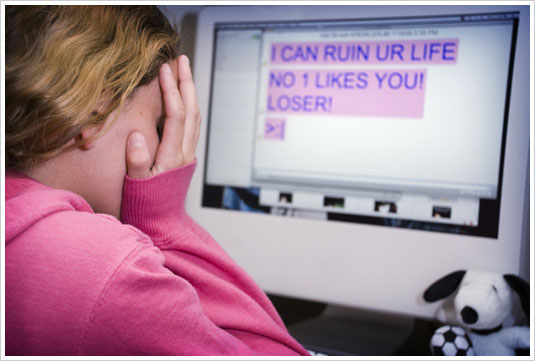
10 Ways Technology Makes Bullying and Cyberbullying Worse
When we were growing up there were bullies. Nobody liked to be bullied, but it was a fact of life that you had to deal with kids that weren’t very nice. Now, schools are so anti-bullying that anything that even slightly seems like bullying is taken very seriously. At least when we were growing up they didn’t have Facebook to upload embarrassing videos to that would ruin a person’s life.
Check out 10 ways technology makes bullying worse.
Join me on Facebook and follow me on Twitter for more information and educational articles on parenting today's teenagers.
Check out 10 ways technology makes bullying worse.
- Facebook: Embarrassing pictures and videos can be uploaded to Facebook in a matter of a few seconds and ruin someone’s life forever. Kids do not understand the damage that something like that can do to a person. People have actually committed suicide because of events like these.
- Cell phones: Growing up we did not have cell phones. Kids these days have the ability to take pictures at a moment’s notice and sometimes not in the most appropriate places. Nude pictures of students in the shower or in the locker room have also caused suicides.
- Texting: Kids can bully by texting now. They can text everyone else at the same time something bad or embarrassing about someone else. They can also send pictures over their phone to everyone on their contact list. Bullying like this can make someone’s life miserable.
- Flip cameras: These cameras are used to shoot quick videos at close range and can be uploaded to the Internet. Kids that want to bully just have to take embarrassing videos of a student and share them with everyone. Or a video can be sent to a parent as well that would get them grounded or in trouble.
- You Tube: A lot of good things have happened to people by posting a video on You Tube, but a lot of bad stuff has happened too. People love to be the first one to dish the dirt on someone else. They witness a fight they grab their cell phone and upload it to You Tube. Or they set someone up and post what they think is a funny video to You Tube, but it’s actually very embarrassing. People don’t think they are bullying when they do this stuff, but they really are.
- Gaming systems: Many online gaming systems allow conversations between the players. Teens have reported that someone pretending to be them said mean things or embarrassing things to another person. This kind of bullying is hard to stop and hard to track. It does however cause a lot of problems for today’s teens.
- Blogs: There are teens that create blogs that post the latest gossip about people and will say nasty things about people. Teens feel that they are anonymous and that no one can tell who is doing the bullying, but there are ways to track down who’s doing it and there are some big consequences. If the bullying leads to a suicide the teen who is behind the bullying can be brought up on charges and sent to jail. Lesser sentences are losing privileges to use a computer for 2 years. Try doing your homework without a computer these days.
- Chat sites: Other sites online have chat rooms where teens can go and chat with their friends online. People can go into these chat rooms and make up a user name and start saying bad things about kids in that chat room. Many times there is a chat room that the students frequent because all their friends go there so when someone bullies in a chat room a lot of that kid’s peer group could be reading it.
- E-mail: Bullies steal identities and will sign into an e-mail account and send damaging e-mails pretending to be that teen. Inappropriate messages to a female teacher or a nasty message to the principal are all things that can really get that child in trouble and they didn’t do anything. Remind your child to keep passwords absolutely private.
- Instant messaging: Bullies will try to send nasty instant messages threatening to do something to a teen when they see them next. Or tell them that they are going to make sure that they don’t get something they want at school like a part in the play or a solo in choir. Bullying can take many forms even if it’s just telling someone that they did a terrible job on their audition or they overheard someone important say that they did a terrible job. Anything like that is going to put undue stress on that child. Make sure that your child is aware and being safe.
Join me on Facebook and follow me on Twitter for more information and educational articles on parenting today's teenagers.
Subscribe to:
Posts (Atom)