Showing posts with label Cyber Safety. Show all posts

Sunday, July 13, 2014

Online Gaming and Safety Measures to Keep Teens Safe

Summertime is more screen time.

When you look in your living room, are your teens and tweens immersed in a video game on a console, computer, or cellphone? Chances are, the games they’re playing have online connectivity. Gartner reports that a large portion of the $111 billion video game market consists of online games. 38 percent of minors enjoy video gaming as a hobby, according to the Entertainment Software Association, and there’s plenty of benefits to encouraging them to play online enabled games. They provide your kids with entertainment, socialization, computer skill development, and brain stimulating activities. Unfortunately, these socialization elements also open your tweens and teens up to certain risks and dangers, such as becoming a victim of hacking or social engineering. Knowing how to protect your tweens and teens and developing their own risk- aware skills is an essential part of safe online gaming.

Checking Appropriate Content

Online games span many genres, from a hidden object game by iWin to MMORPGs such as World of Warcraft. Pay close attention to the rating and types of content and concepts presented in the game your teens and pre-teens are playing. Consider playing along with your children to see exactly what information your kids are picking up, as well as steering them to age appropriate games if the content is not suitable for them. The Entertainment Software Rating Board handles video game ratings, starting at EC for early childhood and going up to AO for adults only.

Checking for Chat Rooms

Many online games have chat rooms or messaging functions to provide social interaction with other gamers. Online games with parental controls allow you to filter out bad language, block private messages, and control whether your child gets chat room capability or not. This is another way of ensuring your kids aren’t exposed to inappropriate content. Some games also allow you to mute specific players if a particular individual is harassing your child.

Time Monitoring

The allure of online gaming makes it easy for your children to spend many hours playing all of the games at their disposal. Track the amount of time that they play through parental monitoring software. Some games, such as World of Warcraft, allow you to prevent an account from being played past a daily or weekly amount, or restricting the time of day that the child can log in. This helps you keep your kids happy with their favorite activities while not allowing it to take up all of their free time.

Avoiding Hackers

Online gaming portals provide hundreds of games through a single website. Some of these games play directly in the browser, while others are downloaded and installed on your computer. Keep the computer anti-virus running to avoid downloads and browser plugins with viruses and trojans attached. Read through gaming portal reviews to find legitimate sites, or check gaming magazines and blogs for this information. Check for https encryption when your child logs into the site, and handle downloadable game installations yourself to stop companion software, such as toolbars, from getting installed.

Check Game Emails

Some online game services send out emails informing players of new developments, specials, and updates. Phishers take advantage of this by posing as official game representatives and tricking users into providing account information. Monitor the email address your child used to sign up with a service, and screen any emails for phishing attempts.

Contributor: James Stewart

Wednesday, May 14, 2014

Internet Addiction and Teens

Summer time can mean more screen-time.

One of the most common concerns from parents of teens, behind drug use, is Internet addiction.
 
It would be difficult, if not impossible, to find a college campus or schools that don’t have Internet.

College students and teens use the Internet for research, communication, and other educational activities.

Of course, students also use the Internet for social media, news, and even online gambling, activities that can be fun and even enriching, but when overused, become a real problem.

Some college students suffer from Internet addiction, unable to step away from the computer or put down mobile devices even for a day. Eighty-four percent of college counselors agree that Internet Addiction Disorder is legitimate, but at the same time, 93% of them have not been fully trained to diagnose Internet addiction, and 94% have insufficient training for Internet addiction treatment. The result? Falling grades, physical problems, and even clinical addiction.

Internet addiction is a real problem for college students and teens today, and here are several trends that are worrisome.

1. Students have feelings similar to drug and alcohol addiction: Two hundred students were asked to abstain from all media for 24 hours, and were then asked to blog about their experiences. The words the students used to describe their feelings during the restriction period were typically the same words associated with a substance abuse addiction: “withdrawal, frantically craving, very anxious, antsy, miserable, jittery, crazy.” It seems that these students are addicted to media, particularly in its online form. This is disturbing, but not surprising, as studies have already shown that Google can actually change your brain.

2. College students are especially susceptible to Internet Behavior Dependence:A college student case study revealed that college students are a “population of special concern” when it comes to Internet addiction, and they are disproportionately vulnerable due to psychological and environmental factors in their lives. When faced with an Internet addiction, college students have a hard time forming their identity and building intimate relationships. Online, students can “develop relationships devoid of the anxiety found in face-to-face relationships,” and they “can take on any persona they desire, without fear of judgment on appearance or personal mannerism, and can avoid racial and gender prejudice.” This type of adaptive behavior tends to diminish the social capacity of college students, leaving them unprepared for the development of real world relationships.

3. Online poker is prevalent on college campusesOnline poker joins two addictions together: gambling and online interaction, so its use on college campuses is especially worrisome. The University of Pennsylvania predicts that over 20% of college students play online poker at least once a month, and you can typically see lots of students playing online poker on a college campus. Although it can be a fun game, and many students may be able to maintain healthy lives while enjoying playing online poker, some simply can’t. At the University of Pennsylvania, researchers noted that among college gamblers that played weekly, over half of them had a serious problem with the habit. In some cases, students fail out of classes or gamble their tuition away, even turning to crime to pay debts created by online poker.

4. Students can’t go 24 hours without the Internet:When 1,000 college students took part in an international study on electronic media, they were asked to go without media for 24 hours. But many students in the study were not up to the challenge. A majority of students did not actually go without media for 24 hours, giving in and checking in with their phones or email. Students confessed, “I sat in my bed and stared blankly. I had nothing to do,” and “Media is my drug; without it I was lost. How could I survive 24 hours without it?” The study revealed a physical dependency on media, especially Facebook and mobile phones. Students recognized that typing the address for their favorite sites had become muscle memory: “It was amazing to me though how easily programmed my fingers were to instantly start typing “f-a-c-e” in the search bar. It’s now muscle memory, or instinctual, to log into Facebook as the first step of Internet browsing.” Other students recognized physical signs of withdrawal, sharing that “I would feel irritable, tense, restless and anxious when I could not use my mobile phone. When I couldn’t communicate with my friends, I felt so lonely, as if I was in a small cage in a solitary island.”

5. Students are surfing, not studying: Students who spend a lot of time online are likely to neglect their studies. In many cases, students who performed well in school before developing an Internet addiction allowed their grades to crash, only then realizing the impact of Internet dependency. Counselors across the US have identified the problems of excessive Internet use, including: lack of sleep and excess fatigue, declining grades, less investment in relationships with a boyfriend or girlfriend, withdrawal from all campus social activities and events, general apathy, edginess, or irritability when off-line, and rationalizing that what they learn on the Internet is superior to their classes. Students may not realize the problem until serious trouble happens: “They flunk out of college. Their real-life girlfriend breaks up with them because all they ever want to do is play on the Net. Their parents explode when they find out their huge investment in their child’s college education is going to support all-night Internet sessions.” By then, it may be too late to recover the damage.

6. The Internet is everywhere: Ninety-eight percent of students own a digital device. This prevalence throws gasoline on a spark: students who are already susceptible to Internet addiction have access online in computer labs, their dorm, and other places around campus, and on top of that, they have the Internet in their pocket at all times. Knowing this, it’s not surprising to find out that 38% of students say they can’t go more than 10 minutes without using a digital device, contributing to an ever-present existence of the Internet on campus.

7. Internet use can physically change your brain: In a study of Chinese college students who were online for 10 hours a day, six days a week, morphological changes in the structure of their brains were noted. Scientists found reductions in the size of the “dorsolateral prefrontal cortex, rostral anterior cingulate cortex, supplementary motor area and parts of the cerebellum as high as 10-20%.” Although at the same time, there was an increase in the “density of the right parahippocampal gyrus and a spot called the left posterior limb of the internal capsule.” These changes happen to the detriment of short term memory and decision-making abilities.

8. Many students need intervention and treatment for their addiction, and it can lead to depression: We might joke about “Crackberries,” but for some, the Internet is truly a significant concern. A study published in BMC Medicine indicated that 4% of the students who participated in their survey met the criteria for having a problem with online addiction. But perhaps the more disturbing fact from this study is that there is a “significant association between pathological Internet use and depression in college students,” putting a population that is already at risk for mental instability in a precarious position.

9. Cyberbullies go to college, too:Although most of the news on cyberbullying focuses on adolescents, the fact is that cyberbullies exist on the college campus as well. It’s not surprising, considering how much time students spend online, and how much impact a college student’s online presence can have. In fact, a University of New Hampshire study reported that one in 10 students was abused online. College students have been the target of sexually violent rants, and one professor at BU had to persuade Facebook to remove his page, which he did not set up himself. Researchers believe that students are especially vulnerable to cyberstalking because “they live in a relatively closed community where class schedules, phones, and e-mails are easy to find.” And sites like Rate My Professors may be helpful for students choosing classes, but some comments may be hurtful for faculty members. Thierry Guedj, adjunct professor of psychology at Metropolitan College reports, “It really hurts faculty members badly when they read these things about themselves online. People have become quite depressed about it.”

10. Tech conditions can be dangerous to your health: College Candy’s list of tech conditions that can be dangerous to your health seems to be written as a joke, citing “Blackberry Neck,” and “Glazey Dazey Lazy Eye,” but these conditions really can be a problem. Using the Internet too much can lead to a sedentary lifestyle, a decline in physical fitness, and as a result, weight gain. Heavy users report carpal tunnel syndrome, eye strain, and headaches. Sleep disturbances can also stem from Internet addiction, as Internet use may lead to later bedtimes and less restful sleep. Additionally, researchers believe that the light from computer screens may affect circadian rhythms, creating a risk factor for insomnia.


Wednesday, August 21, 2013

Parenting Teens Online: Internet Safety and Privacy


Recently we read about whether parents should read their child’s diary or journal.  With the advances of technology, we need to take this a step further:  Should you read their emails or text messages?

Again we can go back to “when safety trumps privacy.”

Our teens deserve to be trusted unless they give us reason to suspect something is wrong.  Is their behavior changing?  Here is a review of some warning signs (many are the same to determine if you should read their diaries).
  • Is your teen becoming very secretive? Sure, teens do like their privacy, however if you have a “gut feeling” something is deeper than a secret, you may have to cross that line.
  • Is your teen becoming withdrawn? Again, teens will develop some attitudes of not wanting to be with adults, however when it becomes extreme, it may be time to cross that line.
  • Is your teen changing peer groups? And this is not into a better one, however to one that is less than desirable? You will again attempt to talk to your teen and find out why and what happened to the other friends.
  • Is your teens eating habits changing?
  • Is your teen sleeping a lot? Bloodshot eyes? Do you suspect drug use?
  • Is your teen sneaking out? Becoming extremely defiant? Not respecting your boundaries?
  • Are they overly protective of their cell phones or computer?
  • Do they hide their cell phones
  • Are they anxious when at their computer, seem fearful, attempt to hide their incoming emails?
  • Overall, is your teen slowly becoming a child you don’t recognize?
Like with determining if you should invade their privacy with their journals or diary, unless your teen or tween gives you good reason to read their private text and emails, as parents, we should respect their privacy.

When it comes to younger children, under 10 years old, parents should always be allowed to see what they are doing.  Most younger children are usually not as protective as teens or tweens.  As a responsible parent, you will know when there are red flags or warning signs and you need to step in.

Keeping an open dialog with your tweens and teens is critical.  Letting them know you are there for them as well as talking to them about the issues of sexting, cyberbullying, predators and other areas of concern.
Should you read your child’s emails or text messages?  Only you can answer that.

Be an educated parent, you will have safer children.

Wednesday, July 17, 2013

Teen Secrets Online: What Are Your Kids Doing Digitally?

Kids and especially teens are notorious for keeping secrets from their parents, and in today’s world of technology they have a whole new world of ways to keep secrets.

Since kids are also incredibly adept at learning and using modern technology and the following list may help you keep better track of what your child may be hiding.
  1. Surfing the Internet: Today, kids have almost unlimited access to computers, and now computers are small enough to carry, enabling access to the internet literally anywhere. This gives kids easy access to sites parents may disapprove of, not to mention “adult only” sites that only ask the user to click a link stating they are over 18 years of age. That’s an easy button to click if you want to keep secrets from parents. Close monitoring of your child’s computer history, password protection and parental blocks can keep your child away from inappropriate sites.
  2. Downloads: Kids love to download- anything they can: pictures, jokes, videos, etc. These downloads may be putting your computer at risk for viruses that could cause permanent damage. Parents need to know the source of any download and that it is safe, as well as keeping up-to-date antivirus protection on all computers.
  3. Music Downloads: What kind of music are your kids downloading and listening to? Even if the site is safe, the music might not be. Listen to the music downloads. If you are not able to understand the lyrics of the songs, you may want to check them out. You can find an internet music site that has song lyrics available to read. Be careful, though, if you do not allow your child to download certain titles, he/she will probably change the file name of the prohibited song to something allowable.
  4. Uploads: Kids are not very discerning when it comes to what others should or should not know about themselves, and their families. Find out what sorts of pictures, text and other files your child might be sharing on social networking sites or shared folders.
  5. Games: What games are your kids playing? Playstation, X-box, computer games, both individual and interactive-online are filled with violence and “adult” themes. Monitor the games your child buys or rents; most are labeled with age guidelines and parental notices. Also, monitor your child’s history with online games. Install a computer block that allows access to only approved sites.
  6. Friends: Kids have many friends. Some of them, they don’t even know. Facebook and other online social networking sites make it easy for children to fall prey to predatory abusers disguised as “friends.” If your child has a Facebook or other social networking accounts, make sure that you know their username and password, and check in on their activity once in awhile.
  7. Cell phone use: How much time your kids spend on the phone, when they are calling and who they are calling are important to know. Read the itemized portion of your bill each month to double check, and if there is a number you don’t recognize or don’t want your child accessing, have it blocked through your service carrier.
  8. Texting: With unlimited texting capabilities on cell phone plans, your kids can text anyone at any time, day or night. Parents need to know who they are texting and the language they are both reading and using while they are texting.
  9. Abbreviations: LOL, and CUL maybe be familiar “social” abbreviations, and ROLOFLMHO may be used by your kids without any qualms, but ROLOFLMAO might be offensive to some parents. Do you know the difference? Also, new abbreviations are added to the lexicon of technical communication on a daily basis. As a parent you need to be familiar with abbreviations so as to know what your kids are saying. You can check the internet for sites that list abbreviations and meanings.
  10. Plagiarism and cheating: That kids are able to access information which expedites learning in ways never before thought of, is a wonderful outcome of technology today. That kids can also use this information to cheat in ways never before thought of, isn’t.
Kids will be kids, and they will try to “get away” with anything they can; this will never change. But the world of technology changes every day, and if parents remain technologically savvy, kids will have to work very hard to continue keeping those secrets.

Be an educated parent, you will have safer teens.

Sunday, February 24, 2013

Why You Should Talk To Your Kids' Friends' Parents' About Internet Safety

Nearly every child in America is familiar with the Internet. And because children of today have grown up in a world with technology at their fingertips, most are savvy when it comes to using the Internet. In fact, most kids of today are better skilled with computers than their parents and their teachers. This is a good thing, but at the same time, it means parents have to be extra cautious about what kids are doing online.

The Internet can be a very dangerous place, especially for those without a lot of life experiences – those that are naive in some ways. Although today’s youth may begin using the Internet at a very young age, they still have not experienced enough of life to always understand that they are vulnerable targets to certain types of predators.

Online Safety

Most parents take the time to instruct their children from an early age about online etiquette and safety – the dos and don’ts of where they can and cannot visit and who it is safe to talk to. But as children age, they tend to find websites that offer new entertainment factors. From sites that offer nothing but games or videos to chat lines and forums intended for older audiences, kids can find websites that entertain in a way that is inappropriate for younger age groups.

The problem is not so much that the entertainment is inappropriate; much more worrisome are the sinister characters that are often lurking in these places, waiting to prey on unsuspecting victims. Wise parents know it is okay to visit the computer history tab and to even use parental locks to keep children safe while online.

Many parents go as far as to keep laptops and computers in central locations. This makes it easy to look over the user’s shoulders to see what sites are being visited. But what happens when kids visit friends? Unfortunately, this is often the time when kids take advantage of a parent being gone or when a parent is inattentive to what sites are being visited online.

Reasons to Talk to Kids’ Friends’ Parents About Internet Safety

Kids will be kids, and when given the opportunity, they are likely to take advantage of it. This is only natural. And this is the main reason many wise parents decide to talk to their kids’ friends’ parents about Internet safety.
It gives them a chance to find out if the same Internet safety guidelines and practices are followed in the friend’s home. If nothing else, the conversation can provide a certain level of peace of mind. Ideas and stories can be shared.
Because the real issue is the online safety of children, everyone is on board with the topic. Below are the top three reasons for having the discussion in the first place:
  1. Children that use the Internet may be exposed to cyber bullying
  2. Children that use the Internet may be exposed to pornography
  3. Children that use the Internet may be exposed to child predators
About Cyber Bullying:

Cyber bullying refers to incidences when kids, including teens, are harassed, threatened, or tormented in some way through the use of the Internet or other digital technology.

About Pornography:

The Internet makes it possible for kids to accidentally or purposely view pornographic material.

About Child Predators:

One of the things that make the Internet so wonderful is that people can remain anonymous, but this is also what can make the Internet such a dangerous place. Kids and teens don’t always know who they are interacting with. The Internet is a playground for pedophiles and other sexual predators.
Another important reason to talk to your kids’ friends’ parents about Internet safety is related to identity theft and personal safety. This is a very real concept in today’s world. Caution should be used when entering information online. This includes giving out phone numbers and addresses.

The Internet is a wonderful learning resource. Kids should be introduced to technology at a very early age, and parents should encourage a continued interest. But parents will have to do their part to ensure kids are safe while online.

Contributor:  Debbie Allen is a freelance writer who writes about a wide variety of topics such as how to choose the best gutter style for your home and parenting issues.

Saturday, February 16, 2013

Do You Know Who Your Teen Is Chatting With Online? The Catfish Scam

This is not just about teens and kids; adults and parents can be lured by deceptive people digitally.

The sad tale of Manti Te’o and his fraudulent girlfriend has brought a problem with online dating to light: the risk of catching a catfish. “Catfish” is the term used to describe a person who poses as someone they’re not in order to establish a relationship with an unsuspecting online dater.

These scams can be carried out for financial gain, or simply to fulfill a need for acceptance and love that the catfish isn’t feeling in their actual lives. Whatever the motive, perpetrating such a ruse can have heartbreaking effects on the targeted party.

If you’re in an online relationship or considering one, here are 10 ways to guard yourself against a catfish scam.
  1. Web Search – Some people hesitate to “Google” their new online sweetheart for fear of invading their privacy. The truth is, a quick web search may turn up a few pieces of information that confirm your significant other’s identity. You don’t have to pry or dig into personal backgrounds with in-depth reports. Just run a quick search and see what comes up.
  2. Insist on Webcam Chats – When someone you’re dating online dodges webchats for an extended period of time, it’s often an indicator that she isn’t who she claims to be. It’s understandable to be hesitant about webchatting in the earliest stages of a relationship, but it’s a bit fishy when she’s professing her undying love but still dodging the camera.
  3. Read Between the Lines – It’s easy to miss signs that are literally right before your eyes when you’re swept up in the excitement of a new romance. Before you get too emotionally invested, make a habit of reading between the lines of what he says and listening to what he doesn’t say. Fabricating an entirely new personality isn’t easy and you may be able to pick up on some subtle warning signs.
  4. Their Facebook Wall – Creating a fake Facebook profile is easy, but making it look genuine is not. When you scan your new sweetie’s Timeline, look at the things posted there. A plethora of games and app requests combined with a dearth of personal postings may be a red flag that the person you’re dating doesn’t actually exist. Think about the things that your own friends and family members post on your wall; if they’re missing from his, it may be because the fictitious character you’re chatting with has no friends or family.
  5. Critical Thinking – When emotion takes over, it’s difficult to think about things objectively and use your own common sense regarding the situation. In many cases, however, an entire false relationship could have been avoided with a bit of old-fashioned critical thinking. If something doesn’t seem to add up, it’s usually because there are holes in the story.
  6. Trust Your Instincts – Your own instincts are a powerful detection tool, but they may be hard to follow when you’re focused solely on your emotions. Having a hunch that all is not what it seems or a nagging feeling that something is off with your new relationship is a sure sign that you should dig a bit deeper before investing further.
  7. Look for Photo Tags – Group photos posted on Facebook or other social networking sites that include your honey, but have none of the other members tagged, can be a sign of a stolen picture. To realistically fake a fully-tagged group shot, a catfish would have to create and maintain that many fraudulent accounts. In the end, even the most dedicated sweetheart scammers probably won’t have that kind of time on their hands.
  8. Use Dating Sites With Verification Services – To help stem the tide of con-artist heartthrobs, some online dating sites are offering verification services that ensure an account holder is who they claim to be. Using these sites to meet someone allows you an extra layer of security against catfish scams.
  9. Be Wary of Elaborate Excuses – Car trouble or bad weather are par for the course in anyone’s life, but if your online girlfriend keeps putting off meetings or webchats because she’s been in a coma-inducing car accident before being sucked into a tornado and swallowed by a tsunami, there’s a good chance there’s a bit of dishonesty going on. Elaborate, over-the-top tales of woe are a trademark move of relationship scammers and can be a very reliable indicator that you’re not talking to the person who you think.
  10. Pay Attention to Detail – Keeping track of all the many details that are necessary to convincingly fake an entire personality and life history is amazingly difficult. Simply keeping an eye out for details that don’t add up or stories that don’t fit into a proper timeline can give you all the evidence you need of an Internet sweetheart that’s not shooting straight.
In the interest of protecting your assets, it’s wise never to send money to someone you’re dating online and have never met in person. Online dating is a legitimate way of meeting and establishing relationships with open and honest people, but there is a slight chance that you’ll come across a huckster or two before you meet your intended.

Source: Longhorn Leads

Should you discuss Catfish with your teens? Absolutely! Click here for tips.

Follow me on Twitter and join me on Facebook for more information.

Thursday, February 7, 2013

Sexual Predators: Ways They Seek Kids Online

With many parents online shopping it also means more adults with not the same motives will be online also.  Do your kids practice online safety measures?

Children today are growing up with the Internet as a regular part of life, yet the World-Wide-Web was fairly new when their parents were young. Along with all the fun and informative things available to children online, a serious danger also lurks. Internet predators like to use the anonymity of the Internet, and are constantly on the lookout for innocent victims.

It’s important for parents to be aware of the ways sexual predators troll for kids online.

Here are 10 things to watch out for to keep your kids safe on the Internet.
  1. Online games – One place Internet predators connect with kids is online games. They will choose games that are popular with the age group they prefer and pose as other kids to foster a friendship with children. Predators will watch for gamer names that indicate the gender, location or other information that is useful to them.
  2. Chat rooms – Sexual predators will pose as kids in chat rooms that are popular with children. This is an easy way for them to garner information and target unsuspecting youngsters. Once they gain a child’s trust, they may try setting up a meeting in person.
  3. Facebook – Parents need to be very careful about whether or not they allow their children to have their own personal Facebook accounts. This is prime hunting grounds for Internet stalkers who target kids. It’s very easy for them to set up fake Facebook pages and “friend” teens and preteens.
  4. Twitter – Social media is a great way for pedophiles to connect with their victims, and Twitter is no exception. Many young people use tweeting as their primary form of communication, and predators know this and go where the kids are.
  5. Websites for kids – Parents may think websites like Disney and PBS Kids are safe for their children to frequent, but predators like to frequent them too. What better place is there to find lonely kids who want to chat?
  6. Instant messaging – Since emails will linger in an account until they’re deleted, Internet predators prefer to use instant messaging that disappears once the window is closed. This makes it harder for parents to monitor who’s talking to their kids and what they’re saying.
  7. MySpace – Some consider MySpace one of the worst sites for online predators who want to connect with children. The online surveys are fun to fill out, but they also provide lots of information that can be used to gain trust with unsuspecting youngsters.
  8. Pictures – Parents need to educate their children on how pictures posted online can be used by sexual predators. It helps them to identify kids who fit their personal preferences, and any picture posted online can be used and manipulated by anyone. Child pornographers are constantly monitoring the Internet for potentially suggestive photos of children.
  9. Target the vulnerable – Internet predators are constantly on the lookout for vulnerable children that they can exploit. Kids that are lonely, unhappy, who are having difficulty with school, or who have poor relationships with their parents are easy targets. They also like kids who are willing to keep secrets from their parents or other authorities.
  10. Use coded language – The shortcut language that kids use for texting makes it harder for parents to readily understand what they’re saying. Just glancing over their child’s shoulder, a text message can look like gobbledygook, so parents need to learn this coded language to help keep their kids safe. You better believe the Internet predators know exactly what texting shortcuts mean and how to use it to gain a child’s trust.
Being aware of the inherit risks that the Internet poses to innocent children is the first step parents who want to keep their children safe need to take. Parents need to educate themselves and their children about the dangers of Internet predators as they teach them how to use the Web.
Establish rules and guidelines for computer and cell phone use, and keep the computer in a common area easily observable by parents and siblings. Use online tools for privacy settings and set up parental alerts. Parental involvement is the key to protecting your children from online sexual predators.

Source: Nanny News Network

Join me on Facebook and follow me on Twitter for more information and educational articles on parenting today’s teenagers.

Wednesday, October 24, 2012

Teens and Online Safety: It is as important as driving safely


Safety and kids are sometimes like oil and water. Parents go to the ends of the Earth to protect their children from harm, yet kids believe they are invincible. That naïve childhood thinking is envious and unrealistic, so the adults must step in at times.


In today’s digital age, Internet safety is quite similar to automobile safety. Both require a higher level of responsibility and can be considered rites of passage. As parents, we’d love to surround our little ones in bubble wrap, but we also know that they must learn to fail in order to grow. Imagine if they never made a mistake!

Here is a little roadmap and a few tips to navigate Internet safety.

Insurance
Car insurance is a must-have for all drivers, but online insurance is just as important. What do we mean by that? Spyware, adware, and other types of online protection keep your computer and its contents secure. There are many companies that offer such online protection, and your kids must know about it. They should never disable any firewalls to gain access to any sites that could compromise the computer or the files. Of course, no one will give you a ticket if you don’t have insurance on your computer. But a hacker or a computer virus doesn’t need much to steal your online identity or destroy the computer contents.

Seatbelts
Restraints in any situation can be a life-saver. While they can’t be buckled, parental controls can guide kids in the right direction when they might be veering off course. Hopefully only used in dire situations, these controls can be loosened or tightened depending on the child and the circumstance.

Reliable Vehicle
Nowadays, computers come in every shape, size, and price range. Remember that not every kid needs his or her own laptop or Mac. The tried but true brands of computers still connect to the same Internet as the higher-end ones. It’s the guidance from parents that makes the difference.

Roadside Assistance
We’ve all been there when a car battery refuses to start or we blow a tire. Thank goodness for roadside assistance, even though some of us hate to admit that we can’t change our own tires. Our kids feel the same way. While parents shouldn’t hover or secretly log into their children’s accounts, parents still need to make themselves available. Fostering an environment where kids can ask questions and make mistakes without judgment is paramount to building trust and opening the lines of communication.

Owner’s Manual
In the end, a plan must be determined by adults and be understood by the children. In no uncertain terms, lay out prohibited and accepted sites and online behavior. No child should be secluded in his or her room to surf the Web, and parents should be aware of what their children are using the computer for each night.

Another tip: Limit online and computer usage. There’s nothing like a breath of fresh air to clear the mind, and your kids deserve that luxury.

Contributor:  Laura Burkey is a freelancer who writes on various topics including home décor, gardens, and online reputations.

Wednesday, August 29, 2012

Internet Safety and Teens

Teens will explore the Internet.
 
The ready availability of virtually anything and the generally unrestricted access the Internet provides is an irresistible draw to any teenager looking to explore. As a parent, you need to do what you can to keep them safe. Clever teens will get around nearly any form of parental control placed on the computer. It’s better in the long run, and much easier in the short term, to teach your teens to use the Internet safely.

1: Virus Protection.
The Internet is full of threats. Viruses show up all over the place, from e-mail attachments to embedded in downloads to fake programs. It’s essential that any computer your teen uses have adequate virus protection installed and kept up to date. It won’t stop a virus from being willfully — if accidentally — installed, but it will help eliminate most threats.
2: Safety Add-Ons. 
There are a number of utilities that can help make browsing technically safer. Spybot: Search & Destroy has an excellent immunization feature that blocks known danger pages from ever loading. Adblock+ is an add-on for most browsers that removes advertisements, including those embedded with malicious code. A good firewall can also help keep threats out.
3: Safe Browsing Habits.
Even the most sophisticated protection in the world won’t stop dedicated human error. It’s best to educate your teens on some safe browsing habits. Some good lessons include “if the virus scanner stops the download, don’t download it again,” “don’t download e-mail attachments from anyone you don’t know,” “learn to recognize advertisements pretending to be legitimate content,” and more.
4: Withholding Information.
The most dangerous thing a teen can do online is give out sensitive information to someone willing to misuse it. Teach them never to give out sensitive information. This information includes passwords, full real names, social security numbers, phone numbers, credit card numbers, usernames and other identity information. Anyone who has a legitimate reason to need some of that information can get it in other ways. No one will ever ask for it through e-mail unless they’re trying to steal it.
5: Complex Passwords.
Bad passwords are easy to guess, easy to brute force break and easy to steal. Good passwords are harder to remember, and people tend to write them down or set them to input automatically, which can be just as dangerous. Teach your teens to use good passwords and remember them. It doesn’t have to be a messy combination of letters, numbers and symbols. A good password might simply be a long phrase with capitalized words, a number and some punctuation. Such a password is easy to remember and hard to guess.
Accidents will happen. Everyone steps outside their boundaries at some point in their life. With some education and some safe browsing habits, your teen will learn firsthand after a major virus, and not identity theft or something more dangerous.

Special contributor: Paul Taylor

Author Bio:
Paul and his wife Julie both spend quite a bit of time coming up with ideas, blogging, and researching all things related to childcare. They take care of all the necessary information related to “babysittingjobs.com/”. He personally thinks his blog will help finding information on all things related to a babysitter.

Join me on Facebook  and follow me on Twitter for more information and educational articles on parenting today’s teenagers.

Thursday, July 26, 2012

Teens and Tech: How Much is Too Much?

Your teens and you probably have more in common than you think in today’s technological world. For one, you are both probably tuned in to the latest advancements in technological gadgets, be it cell phones, home entertainment systems, music, and more. But is that necessarily a good thing?

In the cases of many parents today, looking back on their teenage years and watching the world in which their teens live, they see a big difference. It oftentimes boils down to this: How much technology is too much for your child?

According to research from the Pew Internet and American Life Project, more than three-fourths of teenagers have cell phones in their possession (a higher percentage than possess computers). The research goes on to point out that on average, teenagers send 50 text messages a day, or 1,500 a month. Many teenagers are also logging onto the Internet on their phones (approximately 35%, according to Pew), yet the majority of them still utilize computers to go online.

So, should you as the parent of a teen be worried that too much of their time is being plugged into the technology world?

The Pros and Cons of Our Technological World

It is important to look at both the pros and cons of such devices before you make a final judgement on whether or not your teen should have them in their possession.

First, here’s a look at some of the most popular items and how they can negatively impact your teen:

* Phones - How many times have you had the discussion with your teen about cell phones and driving? As statistics have shown, talking or texting on a cell phone while driving can be a recipe for disaster. Along with the fact that teens are typically not the greatest drivers due to their lack of experience behind the wheel, cell phones in the hands of teen drivers not only puts them at risk, but also other drivers on the road. If your teen insists on having their cell phone in use while driving, make sure it is a hands-free device.
* Computers – Assuming that there is a computer in your home and you are the parent of a teen, it is important to properly monitor their online activities. As too many parents know, teens–especially young girls–are prime targets for online sex offenders. Whether your teen is 13 or 19, if they are living under your roof and your rules, you have every right to monitor their online footprint. That being said, it is good for parents and teens to come to a mutual agreement in this area so that the teen does not tune out your concerns, feeling you are trampling all over their privacy.
* Video games – You no doubt remember your teenage years a few decades back when video games were all the rage. There is a strong likelihood that you played them for hours and hours every week, sometimes driving your own parents nuts. In today’s video gaming world, more and more of the games involve more violent themes than a few decades ago, so parents should have their finger on the pulse of what their teens are playing. If your teen is addicted to such video games morning, noon, and night, have a talk with them about your concerns and what they can do to alleviate them.
Now, here’s a look at the same items and how they can positively impact your teen:
* Phones – Your teen is out on a date and/or behind the wheel. They run into some form of trouble and need to reach you immediately. Having a cell phone on hand is a great means by which to reach out for help, be it a broken down car, an injury, or a run-in with a stranger or the law. Parents should be able to sleep a little better at night or relax more during the day knowing their teen is armed with a way to communicate with them quickly if necessary.
* Computers – For teens that are considering college or the military down the road or even going out into the working world right after high school, computers are essential. Unlike when you went to school and computers were still in their infancy, today’s job world and furthering one’s education demand computer skills. Computers are a great means by which your teen can research, write reports for school, and more. While you do not want your teen addicted to the computer, by all means encourage them to have regular interaction with a laptop, desktop, or mobile device.
* Video games – Given that there is a good chance your teen is not going to go into a career in the video gaming world, you have a good argument for not wanting them to spend 24/7 playing video games. On the other hand, games that are not violent-laden can help your teen with computer skills, thinking skills, reactionary skills, and more. There are many video games out there where both you and your teen can compete together, bringing with it more family time.

With Knowledge in Hand, Is it Time to Talk to Your Teen?

Now that you can see the pros and cons of such devices, is your teenager properly spending time on these items, or are they what you might consider out of control?

If you are not sure how to go about monitoring your teen’s time with cell phones, computer, video games, and other such devices, at least know some of the warning signs of too much activity. From browsing online sites they should not be viewing to wanting to borrow your credit card for online purchases, nip the problem in the bud before it causes trouble for both you and your child.

In the event that you are seeing your teen’s grades drop, if they seem more tired than usual, if you witness them removing themselves from family activities to spend more time in front of a computer and/or playing video games, you need to have a talk with them.

Today’s technology presents great opportunities for teens to learn, expand their horizons, and be in constant contact with you. It also has the same abilities to make teens become removed from the family, limit their growth, and come in contact with the wrong people.

Contributor: With 23 years of experience as a writer, Dave Thomas covers a wide array of topics from home improvements with Cincinnati air conditioning to buying the right electronic products for your home.


Join me on Facebook  and follow me on Twitter for more information and educational articles on parenting today's teenagers.

Thursday, May 31, 2012

Terrible Things Teens Say Online About their Parents

Brace yourself parents!


Is this a time to say, "It's not my kid?"

Though venting their displeasure regarding parental rules and restrictions is nothing new for tweens and teens, the current generation isn’t limited to bashing their parents to one friend at a time over the telephone; now, they can air their grievances in one of the world’s most public forums: Twitter.

Here are ten of the terrible things tweens have been saying for generations, but now say with a hashtag to emphasize their point.
  1. “It’s Not Fair!” – The battle cry of older kids for decades can now be shouted from the rooftops; it’s less than one hundred and forty characters, and allows plenty of room for creative hashtagging.
  2. Physical Insults – Kids often speak without thinking in the heat of indignation; once upon a time, the hurtful insults about their parents’ physical appearances were limited to a few sets of ears. Now, anyone with access to a Twitter feed can see exactly what a tween finds disagreeable about their parents’ appearance.
  3. “It’s My Life!” – Often used in tandem with the old faithful “it’s not fair,” kids that are just starting to assert their independence love to claim that they are, in fact, the masters of their own lives. Also like “it’s not fair,” “it’s my life” is short enough to leave room for heavy-hitting hashtags.
  4. Airing Sensitive and Private Information – Kids that are angry or hurt will lash out in any way possible; often, this means sharing personal and potentially humiliating information. Before the days of social networking, the scope was limited to those that could physically hear a tween’s angry shouts.
  5. “I Hate My Parents!” – Few phrases strike a parent to the heart like “I hate you.” Unfortunately, most kids will utter those dreaded words at some point, and today’s kids can also drive the point home with an angry tweet.
  6. “You’re Not Even My Real Mom!” – When disputes erupt in blended families, an angry tween’s go-to response is “you’re not even my real parent!” When these statements find their way to social networking sites, it can create even more distance in an already shaky relationship.
  7. “My Parents Are So Stupid!” – Mark Twain famously said, “When I was a boy of fourteen, my father was so ignorant I could hardly stand to have the old man around. But when I got to be twenty-one, I was astonished by how much he’d learned in seven years.” This age-old sentiment has been on the lips of kids for decades; now it’s on their Twitter feeds as well.
  8. Using Foul Language to Drive the Point Home – Rebellious kids will often resort to profanity in an attempt to underscore their frustration and to elicit a response from parents. When they do so in a forum as public as Twitter, the humiliation a parent feels in this situation is increased exponentially.
  9. “My Parents are Too Old to Understand!” – The young always feel that their parents are out of touch with modern ways of thinking; this sentiment is both tweeted and the belief in it exhibited by a tween thinking that their parents are too out of touch to operate Twitter in order to find their comments.
  10. Name Calling – When kids resort to publicly calling their parents rude or profane names, it’s both a bid for acceptance from their peers and a way of exhibiting how “adult” they are. Twitter offers tweens not only a venue for airing their thoughts, but a platform for their peers to encourage their poor behavior.
Source:  Find A Babysitter

Join me on Facebook  and follow me on Twitter for more information and educational articles on parenting today's teenagers.

Thursday, March 15, 2012

Teens Surfing Online: Do you know who they are chatting with?

When safety trumps privacy..... being a parent always takes priority... friendship will come later....

"Your teen comes home from school and goes up to her bedroom, closes the door and goes online." - ScreenRetriever


As a parent of a teenager in today's digital society it can be difficult to keep up with the ever changing Internet.  It can be more challenging to keep your lines of communication open with your teen to insure their safety both online and off, however it is a priority for parents.

Stats parents should know:
As an added tool for assistant and protection for your teens and children, parents may want to consider ScreenRetriever.  (Watch the video).

ScreenRetriever gives you peace of mind.  Screen Retriever is the only supervising software that follows the recommendations of the American Academy of Pediatrics.  Sign up today for your free 2-week trial period.  No credit card is required for this trial period.

Need help installing it?  Yoursphere for Parents is a click away with user friendly instructions!
You can join ScreenRetriever on Facebook and follow them on Twitter.

Join me on Facebook  and follow me on Twitter for more information and educational articles on parenting today's teenagers.

Saturday, February 4, 2012

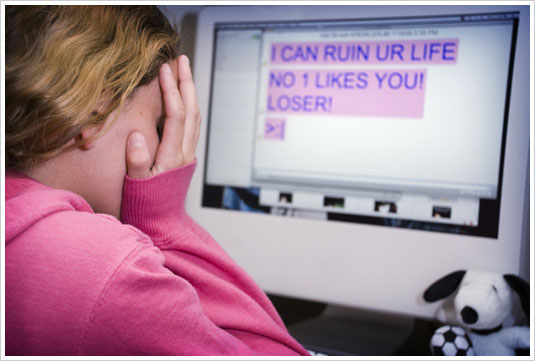
10 Ways Technology Makes Bullying and Cyberbullying Worse

When we were growing up there were bullies.  Nobody liked to be bullied, but it was a fact of life that you had to deal with kids that weren’t very nice.  Now, schools are so anti-bullying that anything that even slightly seems like bullying is taken very seriously.  At least when we were growing up they didn’t have Facebook to upload embarrassing videos to that would ruin a person’s life.

Check out 10 ways technology makes bullying worse.
  1. Facebook: Embarrassing pictures and videos can be uploaded to Facebook in a matter of a few seconds and ruin someone’s life forever.  Kids do not understand the damage that something like that can do to a person.  People have actually committed suicide because of events like these.
  2. Cell phones: Growing up we did not have cell phones.  Kids these days have the ability to take pictures at a moment’s notice and sometimes not in the most appropriate places.  Nude pictures of students in the shower or in the locker room have also caused suicides.
  3. Texting: Kids can bully by texting now.  They can text everyone else at the same time something bad or embarrassing about someone else.  They can also send pictures over their phone to everyone on their contact list.  Bullying like this can make someone’s life miserable.
  4. Flip cameras: These cameras are used to shoot quick videos at close range and can be uploaded to the Internet.  Kids that want to bully just have to take embarrassing videos of a student and share them with everyone.  Or a video can be sent to a parent as well that would get them grounded or in trouble.
  5. You Tube: A lot of good things have happened to people by posting a video on You Tube, but a lot of bad stuff has happened too.  People love to be the first one to dish the dirt on someone else.  They witness a fight they grab their cell phone and upload it to You Tube.  Or they set someone up and post what they think is a funny video to You Tube, but it’s actually very embarrassing.  People don’t think they are bullying when they do this stuff, but they really are.
  6. Gaming systems: Many online gaming systems allow conversations between the players.  Teens have reported that someone pretending to be them said mean things or embarrassing things to another person.  This kind of bullying is hard to stop and hard to track.  It does however cause a lot of problems for today’s teens.
  7. Blogs: There are teens that create blogs that post the latest gossip about people and will say nasty things about people.  Teens feel that they are anonymous and that no one can tell who is doing the bullying, but there are ways to track down who’s doing it and there are some big consequences.  If the bullying leads to a suicide the teen who is behind the bullying can be brought up on charges and sent to jail.  Lesser sentences are losing privileges to use a computer for 2 years.  Try doing your homework without a computer these days.
  8. Chat sites: Other sites online have chat rooms where teens can go and chat with their friends online.  People can go into these chat rooms and make up a user name and start saying bad things about kids in that chat room.  Many times there is a chat room that the students frequent because all their friends go there so when someone bullies in a chat room a lot of that kid’s peer group could be reading it.
  9. E-mail: Bullies steal identities and will sign into an e-mail account and send damaging e-mails pretending to be that teen.  Inappropriate messages to a female teacher or a nasty message to the principal are all things that can really get that child in trouble and they didn’t do anything.  Remind your child to keep passwords absolutely private.
  10. Instant messaging: Bullies will try to send nasty instant messages threatening to do something to a teen when they see them next.  Or tell them that they are going to make sure that they don’t get something they want at school like a part in the play or a solo in choir.  Bullying can take many forms even if it’s just telling someone that they did a terrible job on their audition or they overheard someone important say that they did a terrible job.  Anything like that is going to put undue stress on that child.  Make sure that your child is aware and being safe.
Source:  Full Time Nanny

Join me on Facebook  and follow me on Twitter for more information and educational articles on parenting today's teenagers.

Saturday, December 24, 2011

Sexting, texting and your teens

Online safety of teens and kids of all ages is a priority as well as cell phone safety.  This brings us to a very hot topic which a guest writer has asked me to post his recent article to help parents understand how important it is to understand what sexting is and how they can take steps to help keep their children safe virtually.

Sexting has become a recent trend with mobile users, as nearly 40% of teens reporting sexting at least once or consistently. Sexting is when one person sends a nude, or sexually suggestive picture/text of themselves to another person or a group. The consequences of sexting range from nothing, to serious. For parents, the worries are real and dangerous.

Child Pornography

The primary concern for parents is sexting that involves suggestive photos, especially nudes. Several teens have been charged with ownership of child pornography. That’s because even if two students under age 18 are dating, possession of nude photos of individuals under the age of 18 constitutes child pornography. In some cases, teens who have snapped pictures of themselves have been charged with “manufacturing, disseminating or possessing child pornography.” Those receiving the pictures have faced, and been sentenced, to charges of possession. Convictions lead to life-long registration on sexual offender lists.

Digital World

Once the pictures have been taken, parents have more issues to worry about, namely digital records. After pictures have been taken digitally, they immediately enter a digital world where they can become permanent. One person can send the picture to another and so on until it’s been shared across the digital world. It can all start with one phone. With chat rooms and other websites, it’s easy for pedophiles and other predators to misrepresent age, sex, and location. Teens and kids are constantly connected to the web. Not only can those pictures make their way to illegal websites, they can also make their way to strangers.

Facebook, Twitter, Myspace, and other social media sites are like online directories for everyone and anyone. It can be easy anyone to assume a false identity. With a couple clicks on the phone, a picture gets into the hands of the wrong person.

Psychological Factors

There are many reasons why teens take part in sexting and most of them are a new take on the old world of flirting and courting. Many teens send the texts as flirtatious messages, to boost popularity, or because of peer pressure. They can also include forms of sexual harassment, or bullying.

The ramifications for of this are undocumented in terms of sexting, but the potential psychological issues of self-esteem are wide and concerning. Adolescents and teens are entering a stage of life where body-image and self-esteem are developing. Bullying, harassment, and derogatory comments can degrade and damage morale. The effects of this can last for years or decades.

By sexting, teens put their bodies out there to be judged and critiqued. While their bodies may be healthy, teens use any chances to tease or insult another, especially if it means a chance to elevate themselves in a social clique, or in popularity. The self-esteem issues created by pictures, or suggestive language, being misconstrued, getting into unwanted hands or from unwarranted comments, can devastate teens and lead to suicide.

Cautionary Steps

Beyond eliminating and forbidding the use of all digital devices, there are other measures that parents can take to protect their teens.

The first is establishing a good relationship. Studies consistently show that parents who foster good relationships with their children have more influence on them than the media or peer pressure.
A strong relationship makes it easier for parents to approach kids about sexting and its consequences. Being honest with children about the potential legal consequences, psychological factors, and personal ethics and morals behind sexting is a good way to help them understand its seriousness.

To instill that seriousness, parents should monitor their child’s activities and friends. Much of sexting in teenagers is caused by peer pressure or social interactions. Supporting them in making the right decisions, and spending less time from those who are sexting, may be the best way to keep them safe.

Special contributor:  Steven Farrell is the administrator of ReversePhoneLookup.org, the best reverse phone directory online.